
Field notes
Notes from building Ready Together.
What I’m building, testing, and learning while Ready Together takes shape on Android and iPhone.
What changed when people tried Ready Together
Three beta families who use Sismos México completed a Ready Together drill on September 19, following early work on shared preparedness.
A useful result: three bugs I could not ignore
What three ordinary QA failures taught me about trust, clarity, and the difference between completing a flow and making it feel dependable.
From a seismic signal to a family response
How Ready Together connects SeedLink observations to reviewed earthquake events and private family check-in notifications.
Two phones, one practice: the test before the claim
The physical Android–iPhone experiment Ready Together must pass—or learn from—before claiming that one device per participant improves a household practice.
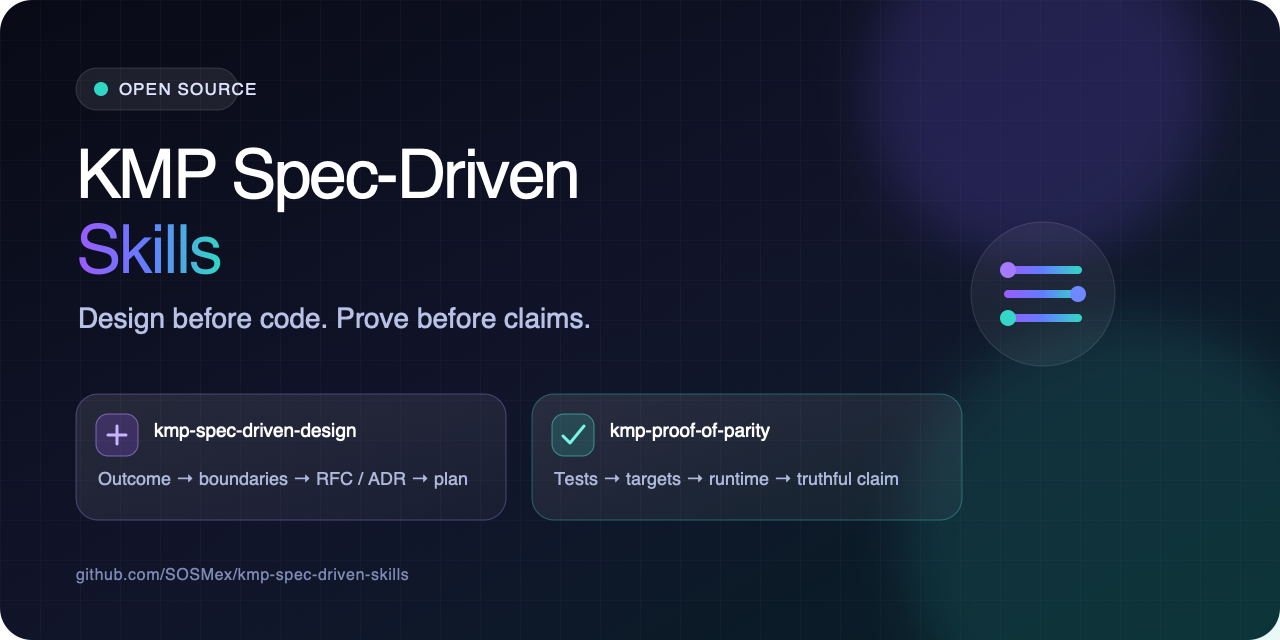
Turning our KMP workflow into reusable agent skills
Why I open-sourced two agent skills for spec-driven Kotlin Multiplatform design and evidence-based parity verification.
 Read the story →
How we use specs, RFCs, and ADRs
How a repository-first workflow combines mobile engineering judgment with agent-assisted implementation while keeping decisions traceable.
Sharing safety rules, not platform assumptions
An evidence-led technical field note on why Ready Together shares safety-sensitive semantics through Kotlin Multiplatform while retaining genuinely Android/iOS-specific work at native boundaries.
From Sismos México to Ready Together
How Sismos México, Venezuela, Colombia, and a missing coordination layer shaped the shared-preparedness question.
A note on scope
Ready Together is still in development. It is not an earthquake alert or emergency service. These notes share the work honestly, including what remains unresolved.